Yeasted bread · Medium
Ciabatta With Biga (80% Hydration)
Open, chewy ciabatta made with a 50% biga and 80% hydration. Mix the biga the night before, then shape nothing: the dough is cut and baked. Scale it in the preferment calculator.
- Hydration
- 80%
- Total time
- 20 h 55 min
- Hands-on
- 35 min
- Makes
- 2 loaves
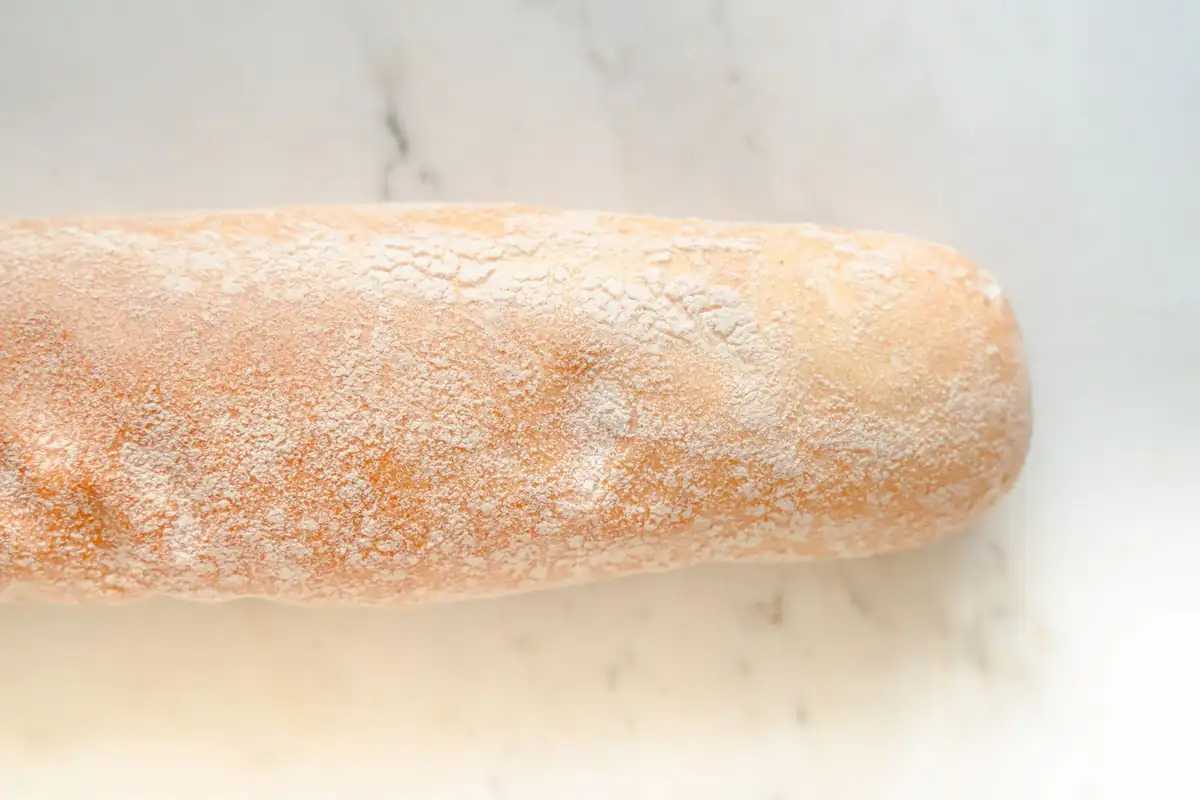
Ciabatta is where wet dough pays off. At 80% hydration, with half the flour fermented overnight as a stiff biga, it bakes into a light, chewy loaf with holes big enough to hold a pool of olive oil.
You never shape it, which makes it easier than it looks. The work is in handling a very wet dough gently so the gas stays in. Think of it as moving a water balloon, not kneading bread.
Formula
Change the count or piece weight and every gram updates. Percentages are of total flour, including the flour in any starter or preferment.
| Ingredient | Baker's % | Weight |
|---|---|---|
| Biga | ||
| Bread flour | 50% | 246 g |
| Cool water | 25% | 123 g |
| Instant yeast | 0.1% | 0.5 g |
| Dough | ||
| Bread flour | 50% | 246 g |
| Water, 30 °C (86 °F) | 55% | 271 g |
| Fine sea salt | 2.2% | 11 g |
| Instant yeast | 0.3% | 1.5 g |
| Total dough | 900 g | |
| Total flour · water | 493 g · 394 g | |
| Hydration | 80.0% | |
What does this cost to make?About $0.75 per loaf at example US prices
| Ingredient | Cost |
|---|---|
| Bread flour | $0.71 |
| Cool water | $0.00 |
| Instant yeast | $0.010 |
| Bread flour | $0.71 |
| Water, 30 °C (86 °F) | $0.00 |
| Fine sea salt | $0.06 |
| Instant yeast | $0.03 |
| Ingredients | $1.51 |
| Per loaf | $0.75 |
| Per 100 g of dough (ingredients) | $0.17 |
| Suggested retail price | $2.50 |
| Suggested wholesale price | $1.50 |
Retail is 3× cost (a 70% margin), rounded up; wholesale is 60% of retail. Example US prices (Nov 2026), ingredients only. Put in what you pay, plus packaging and your time, in the cost calculator.
Use your own prices →Nutrition per serving (estimate), 1/5 of the loaf · 180 kcal · carbs 36 g · protein 6 g · fat 1 g · fiber 1 g · sodium 420 mg. Worked out from the ingredient weights above, toppings and fillings included.
A scale that reads 0.1 g helps with yeast this small: the biga for two loaves takes about half a gram. A bench scraper does all the dividing.
What the biga does
A biga is a stiff Italian preferment, usually 45–60% hydration, left 12–18 hours. It brings flavour and makes the final dough both stronger and stretchier, which a loaf this wet needs.
The preferment calculator lets you change how much of the flour goes into the biga and works out the rest of the dough to match.
Keeping the holes
Every time you press the dough, you lose holes. Tip it out top side down so the bubbly surface ends up as the top of the loaf after the flip. Cut, don’t tear, and move pieces with your hands flat underneath.
Method and schedule
- Mix the biga : 5 min, hands-on.
- Biga ferments : 16 h, waiting.
- Mix the dough : 15 min, hands-on.
- Bulk with folds : 2 h 30 min, waiting.
- Divide : 10 min, hands-on.
- Proof : 45 min, waiting.
- Heat the oven : 45 min, oven, during proof.
- Bake with steam : 25 min, oven.
- Cool : 45 min, waiting.
Pick a start time, or the time you want it ready, and each step gets a clock time. Tick steps off as you go; this page remembers your place on this device.
Plan your bakeTotal time 20 h 55 min
1 Mix the biga
The night before, mix the biga flour, water and yeast into a stiff, shaggy lump. Don’t try to make it smooth. It is supposed to look rough.
2 Biga ferments
Cover and leave it at 18–20 °C (64–68 °F) for 14–18 hours.
Look for: Risen and soft, full of small holes when you tear it, smelling sweet and a little boozy.
3 Mix the dough
Tear the biga into walnut-sized pieces, pour the dough water over and squeeze until it breaks up into a lumpy slurry. Add the flour, yeast and salt and mix until it is all one wet mass.
Look for: No dry flour and no lumps of biga left. It will be very wet. That’s right.
4 Bulk with folds
Move it to an oiled straight-sided container. Coil fold every 30 minutes for two hours, then leave it to finish.
Coil fold - Lift from the middleUntil it lets go of the container
- Let the ends tuck underLower it gently
- Turn a quarterLift and tuck again
Look for: About doubled, with big bubbles on top and along the sides.
5 Divide
Flour the counter and the top of the dough heavily. Tip it out with the bubbly top side down on the flour. Cut it into rectangles with a floured scraper. Don’t shape it and don’t press on it.
6 Proof
Lift each piece onto a floured couche or parchment. If one spreads too much, fold it over itself once. Proof 30–45 minutes.
The poke test - Springs right backNeeds more time
- Fills in slowlyReady to bake
- Dent staysOver-proofed: bake now
Look for: Puffy and a little wobbly; a finger dent comes back slowly.
7 Heat the oven
During the proof, heat the oven to 240 °C (465 °F) with a baking stone or heavy tray in it and an empty pan on the bottom rack for steam.
8 Bake with steam
Flip each piece floury side up onto parchment, slide it onto the stone and pour a cup of hot water into the steam pan. Bake 22–25 minutes.
Look for: Golden brown with darker edges, and it sounds hollow when you tap the base.
9 Cool
Cool on a rack for at least 45 minutes.
Troubleshooting
- Flat loaves: the dough needed more strength. Add a fifth set of folds.
- Tight crumb: the dough got pressed when you divided it. Cut, don’t push.
- Biga smells like nail polish: it went too far. You can still use it, but cut the time or temperature next round.
Baker's notes
Once you have made it as written, these are the changes worth trying.
- Push the dough water to 85% once you are comfortable, adding the extra 5% after the salt.
- Add 10% whole wheat or durum to the dough flour for colour and a sweeter crust.
- For a longer, more sour biga, drop the biga yeast to 0.05% and leave it 20–24 hours at 18 °C.
Questions
Can I use active dry yeast?
Yes. Use about 1.25 times the instant yeast weight and dissolve it in the water first.
Can I make it the same day?
Mix a poolish 3–4 hours ahead with 0.3% yeast instead of the biga. The crumb is good but the flavour is plainer.
What is the difference between a biga and a poolish?
A biga is stiff, around 50% hydration; a poolish is a wet batter at 100%. Biga gives more strength and a nutty flavour, poolish more stretch.
Bake next
Feedback on this recipe
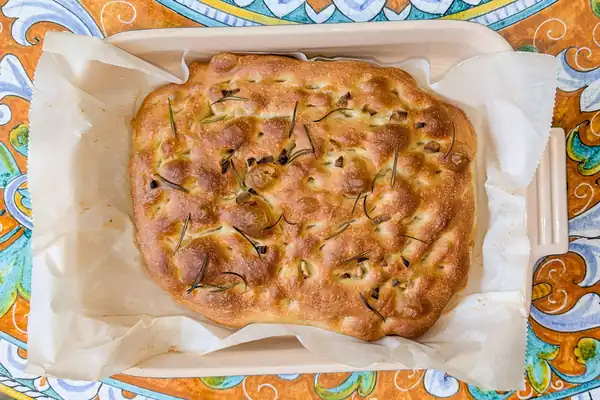
Formula and method by the BreadHydration team, written for home ovens and checked against our calculators. Photo by Antoni Shkraba on Pexels, used under the Pexels license; it shows this style of bread, not our own bake. Found an error? Tell us.