Sourdough · Medium
Whole Wheat Sourdough (50% Whole Grain)
Half whole wheat, half bread flour at 78% hydration. Whole grain drinks more water, so the formula runs wetter than white sourdough. Scale it and plan the bake.
- Hydration
- 78%
- Total time
- 22 h 40 min
- Hands-on
- 35 min
- Makes
- 1 loaf
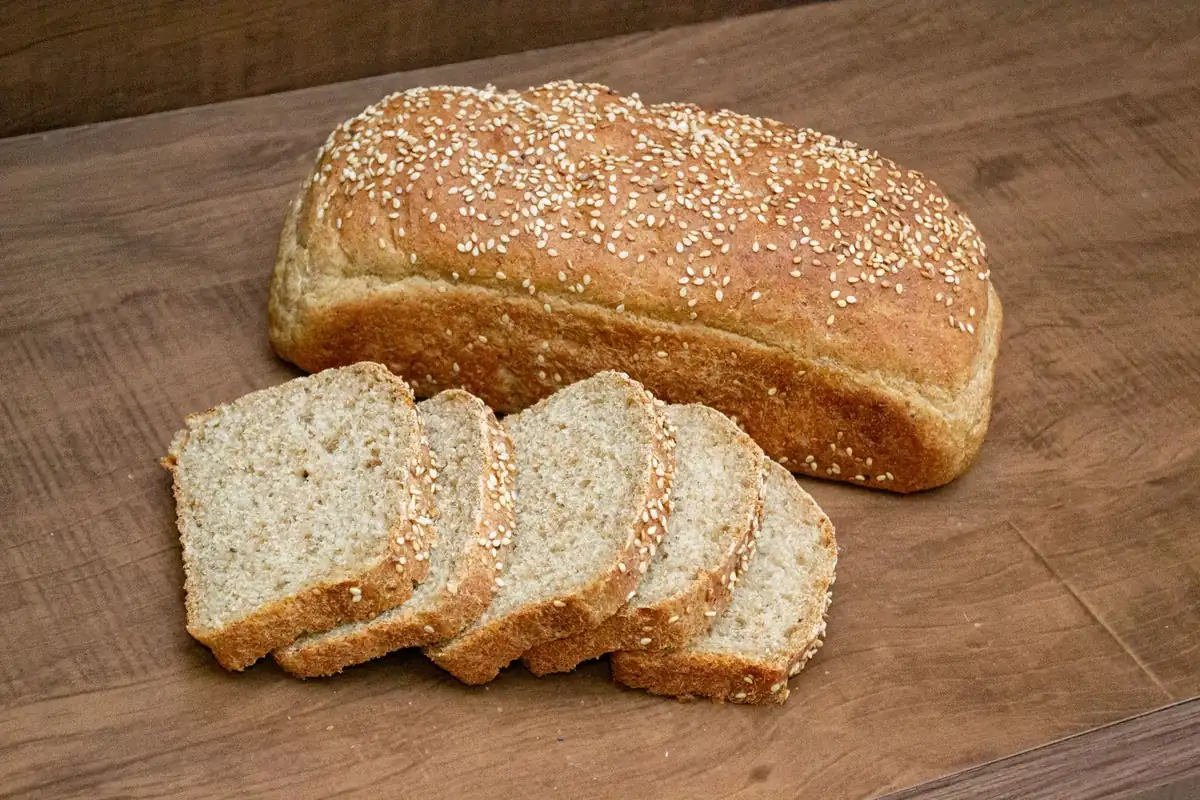
The usual mistake with whole wheat sourdough is not enough water. Bran soaks up far more than white flour, so a dough that feels right at 70% with bread flour turns stiff and dry once half of it is whole grain. That stiffness is why so many whole wheat loaves come out like bricks. This one runs at 78%.
The other thing that matters is the soak at the start. Give the bran an hour with the water before anything else goes in and the dough stretches instead of tearing.
Formula
Change the count or piece weight and every gram updates. Percentages are of total flour, including the flour in any starter or preferment.
| Ingredient | Baker's % | Weight |
|---|---|---|
| Whole wheat flour | 45% | 237 g |
| Bread flour | 45% | 237 g |
| Ripe sourdough starter (100% hydration)Fed 4–8 hours before, doubled and domed | 20% | 106 g |
| Water, 28 °C (82 °F) | 68% | 359 g |
| Fine sea salt | 2% | 11 g |
| Total dough | 950 g | |
| Total flour · water | 528 g · 412 g | |
| Hydration | 78.0% |
What does this cost to make?About $1.62 per loaf at example US prices
| Ingredient | Cost |
|---|---|
| Whole wheat flour | $0.73 |
| Bread flour | $0.68 |
| Ripe sourdough starter (100% hydration) | $0.15 |
| Water, 28 °C (82 °F) | $0.00 |
| Fine sea salt | $0.06 |
| Ingredients | $1.62 |
| Per loaf | $1.62 |
| Per 100 g of dough (ingredients) | $0.17 |
| Suggested retail price | $5.00 |
| Suggested wholesale price | $3.00 |
Retail is 3× cost (a 68% margin), rounded up; wholesale is 60% of retail. The starter is costed as the flour and water in it, so it adds almost nothing. Example US prices (Nov 2026), ingredients only. Put in what you pay, plus packaging and your time, in the cost calculator.
Use your own prices →Nutrition per serving (estimate), 1/10 of the loaf · 185 kcal · carbs 38 g · protein 7 g · fat 1 g · fiber 3 g · sodium 410 mg. Worked out from the ingredient weights above, toppings and fillings included.
An instant-read thermometer earns its place with whole wheat: the crust looks done well before the middle is.
How much water whole wheat needs
A working rule: add 5–10 points of hydration for every 50% whole grain you swap in. Brands vary a lot, and fresh-milled flour usually takes the most.
Judge by feel after the soak. Soft and a little tacky is right. If it feels firm, add water 10 g at a time until it relaxes.
It ferments faster
Bran and germ bring more food and more wild yeast, so whole wheat dough moves faster than white at the same temperature. Expect bulk to finish 30–60 minutes sooner, and keep the cold proof on the short side.
Method and schedule
- Feed the starter : 5 min, hands-on.
- Starter rises : 5 h, waiting.
- Soak the flour : 5 min, hands-on, during starter rises.
- Rest : 1 h, waiting, during starter rises.
- Add starter and salt : 10 min, hands-on.
- Bulk with folds : 4 h, waiting.
- Pre-shape and rest : 25 min, hands-on.
- Shape : 10 min, hands-on.
- Cold proof : 10 h, waiting.
- Heat the oven and pot : 45 min, oven, during cold proof.
- Bake : 50 min, oven.
- Cool : 2 h, waiting.
Pick a start time, or the time you want it ready, and each step gets a clock time. Tick steps off as you go; this page remembers your place on this device.
Plan your bakeTotal time 22 h 40 min
1 Feed the starter
Feed your starter so it peaks when you mix. A 1:1:1 feed (equal weights of starter, flour and water) at about 24 °C (75 °F) usually peaks in 4–6 hours. Make a little more than the recipe needs so you have some to keep.
2 Starter rises
Leave it somewhere warm. Put a rubber band around the jar at the starting level so you can see the rise.
Look for: Doubled or more, domed on top, bubbly all through, and it smells sour-sweet rather than sharp.
3 Soak the flour
An hour before the starter is ready, mix both flours with all the water.
4 Rest
Cover for an hour. Bran is like a sponge with sharp edges: given time to soak, it softens and stops cutting through the gluten.
5 Add starter and salt
Pinch in the starter and salt until the dough is smooth again.
6 Bulk with folds
At 25 °C (77 °F), do three sets of stretch and folds 30 minutes apart, then leave it. Whole grain ferments faster than white flour, so start checking at hour three.
Stretch and fold - Lift one sideWet hand, stretch until it resists
- Fold it overLay it on the far side
- Turn the bowlRepeat on all four sides
Look for: About 50% bigger, softer to the touch, and it smells pleasantly sour.
7 Pre-shape and rest
Round it loosely and let it rest 20 minutes.
8 Shape
Shape a batard or round and set it in a floured basket. Rolling the top over a tray of oats or seeds hides a rough surface and adds crunch.
9 Cold proof
Into the fridge for 8–12 hours. Stay at the short end: whole grain dough over-proofs sooner.
10 Heat the oven and pot
Heat the Dutch oven at 250 °C (480 °F) for the last 45 minutes of the proof.
11 Bake
Score and bake 20 minutes covered, then 25–30 minutes uncovered at 230 °C (450 °F). Whole wheat browns fast. If the crust is dark before the middle is done, lay foil loosely over the top.
Look for: The middle reads 96 °C (205 °F) and the base sounds hollow when tapped.
12 Cool
Give it two hours. Whole wheat crumb stays sticky longer than white.
Troubleshooting
- Dense loaf: usually too little water, not too little time. Try 80% next bake.
- Sour, slack dough that won’t hold its shape: over-fermented. Cut bulk time or use cooler water.
- Crumbly slices: let it cool fully and use a serrated knife.
Baker's notes
Once you have made it as written, these are the changes worth trying.
- Sift out the coarse bran, soak it in an equal weight of hot water and fold it back in at the second set. You get noticeably more volume.
- Going to 100% whole wheat: 82–85% hydration, gentle shaping, and consider a loaf tin.
- A 2–3% honey or malt addition softens the bitterness some whole wheat brands carry.
Questions
Can I make it 100% whole wheat?
Yes. Raise hydration to 82–85% and expect a denser loaf. Shape gently and consider baking it in a tin.
Does fresh-milled flour change anything?
It usually absorbs more water and ferments faster. Our fresh-milled flour guide covers the changes in detail.
Should I sift out the bran?
It helps volume a little but you don’t need to. See the baker’s notes above if you want to try it.
Bake next
Feedback on this recipe
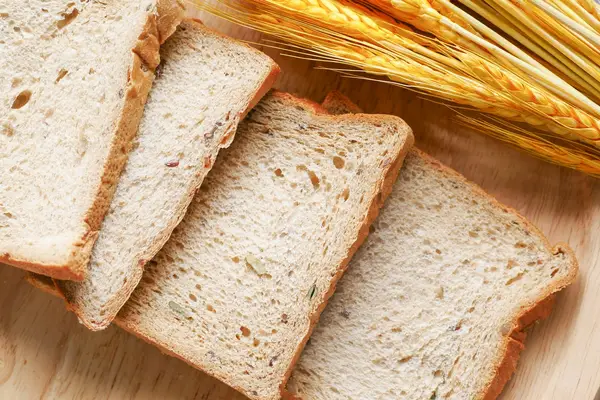
Formula and method by the BreadHydration team, written for home ovens and checked against our calculators. Photo by Jonas Kakaroto on Pexels, used under the Pexels license; it shows this style of bread, not our own bake. Found an error? Tell us.